
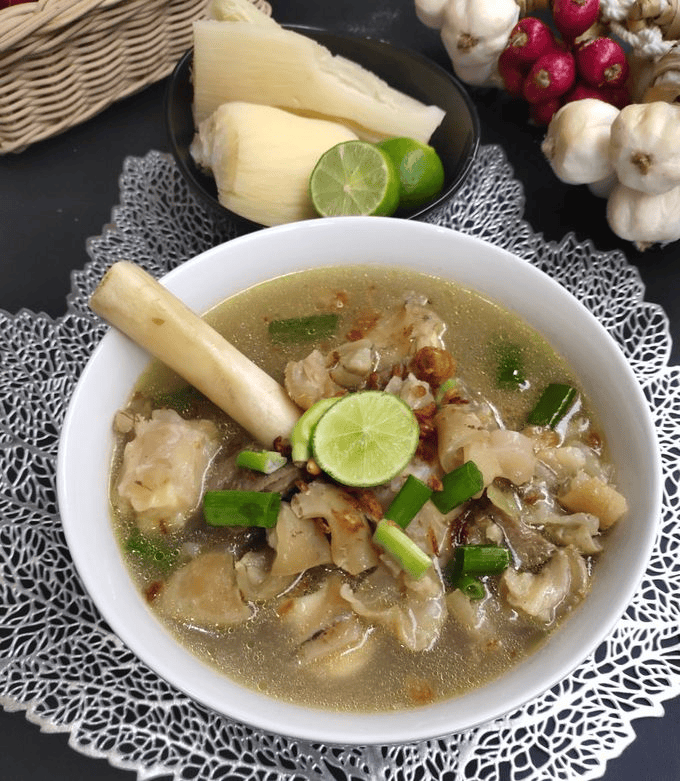
More than a culinary speciality, Kaledo is one of Palu’s most enduring cultural icons; a dish shaped by heritage, ritual and the unhurried art of cooking. Through its clear, tangy broth and tender cuts of beef leg, it offers not only flavour, but also a deeper connection to the history of Central Sulawesi.
Kaledo is one of those dishes that immediately tells you where you are. A well-known speciality of Palu, its name is derived from Kaki Lembu Donggala, though today it is more commonly prepared with beef rather than buffalo. At first glance, it appears deceptively simple: a clear broth, cuts of beef leg, and bones rich with marrow. Yet the dish carries a depth of character that feels entirely its own — savoury, lightly tangy, and deeply comforting in a way that lingers long after the meal is over.
Its distinctiveness lies in both flavour and process. Kaledo is made through a long simmering method that allows the meat to soften and the broth to develop its clean but full-bodied taste. The acidity comes from tamarind, while the seasoning itself remains notably restrained, often relying on little more than salt, fresh chillies, and a few simple flavourings. That restraint is precisely what makes it memorable: nothing feels excessive, and each element is allowed to speak clearly. Served hot, often with boiled cassava or steamed rice, it is a dish that feels grounded in both place and tradition.
Beyond its flavour, Kaledo also carries a long cultural history. The dish is believed to date back centuries and was once associated with aristocratic or ceremonial occasions among the Kaili people, particularly in areas connected to Donggala and the Palu valley. Over time, however, it moved beyond courtly settings and became part of everyday life, evolving into one of the region’s most recognisable culinary markers. Today, it is commonly served at family gatherings, celebrations, and festive moments, reinforcing its place not merely as food, but as part of a shared social memory.
For visitors to Palu, tasting Kaledo feels less like trying a local menu item and more like stepping into the rhythm of the city itself. It is a dish shaped by landscape, community, and time — and perhaps that is why it remains so beloved. In every bowl, there is more than broth and bone: there is a sense of continuity, a flavour of home, and a story still being told.
Credit: Endah Purwanti S