Explore Indonesia’s ethnic groups, traditions, languages, and rich cultural heritage
Indonesia is home to more than 1,340 ethnic groups, according to Statistics Indonesia (BPS), making it one of the world’s most culturally diverse countries. Spread across more than 17,000 islands, these communities have developed distinct languages, traditions, customs, and artistic heritage that together define Indonesia’s national identity.
The country’s diversity is reflected in its national motto, Bhinneka Tunggal Ika (“Unity in Diversity”), which celebrates the coexistence of different cultures, religions, and ethnic communities.
Indonesia at a Glance
- Ethnic groups: More than 1,340 (BPS)
- Living local languages: More than 700
- Islands: More than 17,000
- National motto: Bhinneka Tunggal Ika (“Unity in Diversity”)
- How Many Ethnic Groups Does Indonesia Have?
Statistics Indonesia (BPS) records more than 1,340 ethnic groups across the archipelago. The exact figure may vary between studies because researchers use different classification methods. Some recognise smaller communities as distinct ethnic groups, while others classify them as subgroups within larger ethnic identities.
Regardless of the methodology, Indonesia remains one of the most ethnically and culturally diverse nations in the world.
Major Ethnic Groups in Indonesia by Region
Every region of Indonesia has its own cultural identity and traditions.
- Sumatra is home to communities such as the Batak, Minangkabau, and Malay peoples.
- Java is home to Indonesia’s largest ethnic communities, including the Javanese, Sundanese, and Madurese.
- Kalimantan is known for Indigenous Dayak communities alongside the Banjar and Kutai peoples.
- Sulawesi is home to the Bugis, Makassar, Minahasa, and Toraja ethnic groups.
- Bali and Nusa Tenggara feature the Balinese, Sasak, and Bima communities.
- Maluku and Papua are home to the Asmat, Dani, Ambonese, and many other Indigenous peoples with distinctive traditions and artistic heritage.
What Makes Indonesia’s Ethnic Diversity Unique?
Indonesia’s cultural richness extends far beyond ethnicity. The country is home to more than 700 living local languages, making it one of the world’s most linguistically diverse nations. These languages preserve generations of oral history, traditional knowledge, and cultural identity.
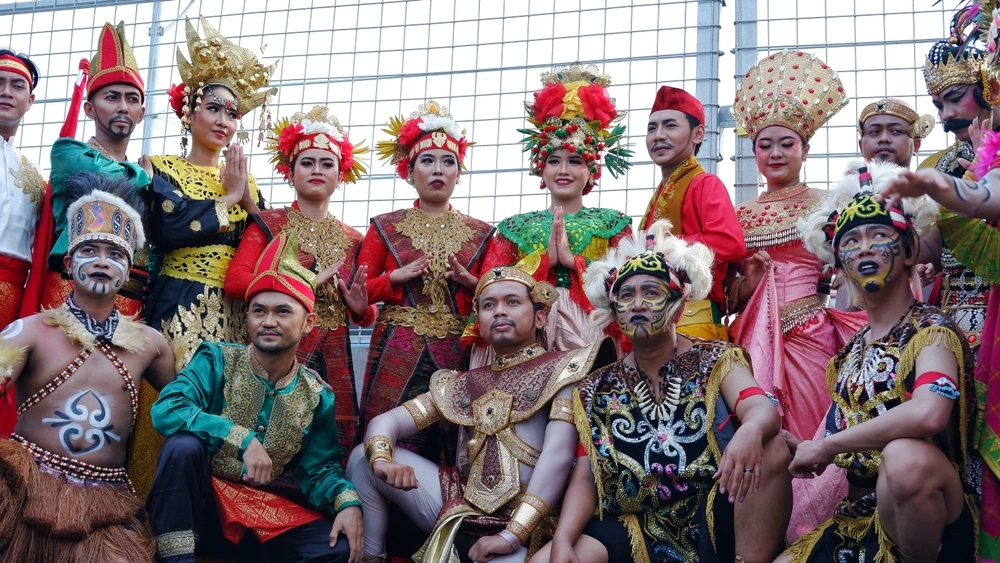
Every ethnic community also maintains its own customs, ceremonies, architecture, clothing, music, dance, and cuisine. Cultural icons include West Sumatra’s Rumah Gadang, Bali’s Ngaben cremation ceremony, Papua’s internationally recognised Asmat woodcarving traditions, and the Torajan Tongkonan houses. Together, these traditions form one of the world’s richest cultural landscapes.
Why Do Ethnic Group Numbers Vary?
Different publications may report different totals because they use different classification systems. Some studies recognise smaller communities as separate ethnic groups, while others group them under broader identities based on shared language, ancestry, or history.
Although the reported number may vary slightly, all sources highlight Indonesia’s extraordinary cultural diversity.
Experience Indonesia’s Cultural Diversity
Visitors can experience Indonesia’s cultural heritage by attending traditional festivals, exploring heritage villages, supporting local artisans, and learning directly from local and Indigenous communities. Respecting local customs helps preserve these traditions while creating more meaningful travel experiences.
As Indonesia continues to grow and evolve, its cultural diversity remains one of its greatest strengths. By preserving traditions, celebrating differences, and fostering mutual respect, future generations can ensure this extraordinary heritage continues to flourish. United by shared values while embracing hundreds of cultures and languages, Indonesia demonstrates that diversity is not only a source of identity but also a foundation for resilience, creativity, and national unity.
Source: Indonesian Ministry of Tourism