
A Balinese architect carrying culture, ecology and local identity into the future.
As Indonesia marks its National Day, Sun Media’s 81 Success Stories of Indonesia highlights individuals whose work and experiences contribute to Indonesia’s story at home and abroad. The series brings together people from different fields whose work reflects aspects of Indonesia while reaching audiences beyond the country’s borders.
Popo Danes represents that idea through architecture. An award-winning Indonesian architect from Bali, Mr. Danes has spent more than three decades developing projects in Indonesia and overseas, with Natura Resort and Spa and Ubud Hanging Gardens receiving ASEAN Energy Awards. Throughout his career, his Balinese background has remained an important influence on how he approaches architecture, hospitality and the future of the island where he grew up.
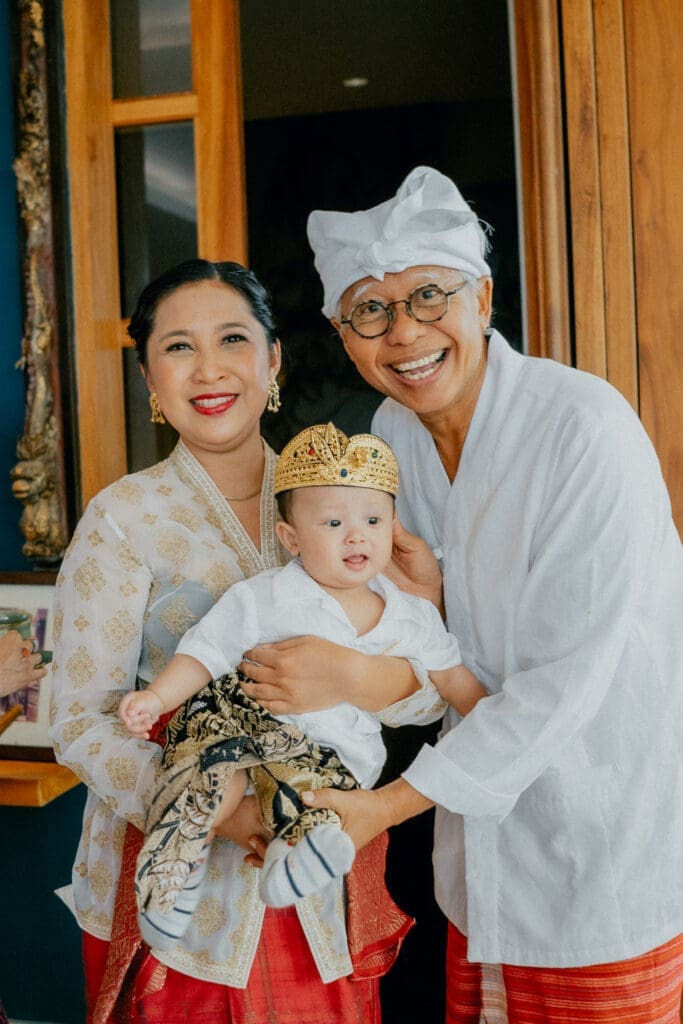
“I’m an architect, I’m Balinese, and the industry in Bali is tourism,” he told Sun Media.
That connection between profession and place can be traced back to his childhood. Growing up around his father’s work and people involved in construction, Mr. Danes became familiar with the building industry from an early age. By the time he was eight, he had already decided that architecture was the career he wanted to pursue.
“I already decided to become an architect when I was eight years old,” he said. “Since then I only have Plan A. I never have Plan B.”
He began turning that ambition into practice while he was still studying. Working as a freelancer, he gradually built a team and took on projects, so that by the time he graduated in 1991, he already had employees and an active practice.
His early work soon opened opportunities beyond Bali. A study programme in the Netherlands in 1992 exposed him to another architectural environment, while an opportunity to design a restaurant for the InterContinental Hotel in Dubai followed in 1993, the same year he established his own architecture practice.

Working abroad gave Mr. Danes a broader perspective on tourism and architecture. That perspective developed further in 1994, when he designed the Bali Pavilion at ITB Berlin and encountered the tourism industry from an international standpoint. The experience prompted him to consider more closely how Bali’s cultural identity could shape the way its hospitality industry developed.
As his practice grew, that question became increasingly connected to another concern: the environment. Mr. Danes saw that Bali’s culture and tourism industry depend on the natural surroundings that support them, making environmental protection relevant not only to the island’s ecology but also to its future development.


His involvement with the Wisnu Foundation brought those concerns into a more practical context. The foundation focused on issues including waste, water and coastal areas, reinforcing his awareness of the environmental pressures facing Bali.
“It’s so easy for us to damage the environment,” Mr. Danes said.
That awareness has also influenced his architectural approach. He considers issues such as energy efficiency, material selection, recycling and reuse when developing projects.
His work in other countries has given him another way to apply those principles. In India and the Philippines, Mr. Danes explained that he adapts ideas developed through his experience in Bali to the culture and circumstances of each destination. At the same time, working with different communities has allowed him to learn from their own local traditions.
Those international experiences have also sharpened his view of Bali’s development. Mr. Danes supports investment and recognises the opportunities it creates, but he also has concerns about rapid development, infrastructure, land ownership and the effects of these changes on local communities.


For that reason, he sees architecture as extending beyond the buildings themselves. He encourages clients to support communities around their projects, while also sharing his experience with young architects and architecture students.
His work with the next generation reflects the same principle that has shaped his own career: engaging with the wider world does not require abandoning where you come from. Instead, he wants young Indonesians to build their skills and broaden their horizons while continuing to develop the identities that connect them to their communities.
“Where we still can be ourselves, it’s very important,” he said. “Because this one to me, it’s becoming our contribution to this world.”
That belief gives his message for Indonesia’s 81st National Day a broader meaning. For Mr. Danes, Indonesia’s cultural diversity is not simply something to preserve; it is something the next generation can continue developing and sharing as the country becomes more connected to the world.
“Be there to proudly bring your own colour to make the entire world more colourful,” he told Sun Media.
Written by: Ciara Leon