Indonesia expands mangrove restoration through government, business and community collaboration
Indonesia is accelerating mangrove restoration efforts by encouraging stronger collaboration between the government, businesses and local communities to strengthen climate resilience, protect coastal ecosystems, enhance food security and support sustainable economic growth.
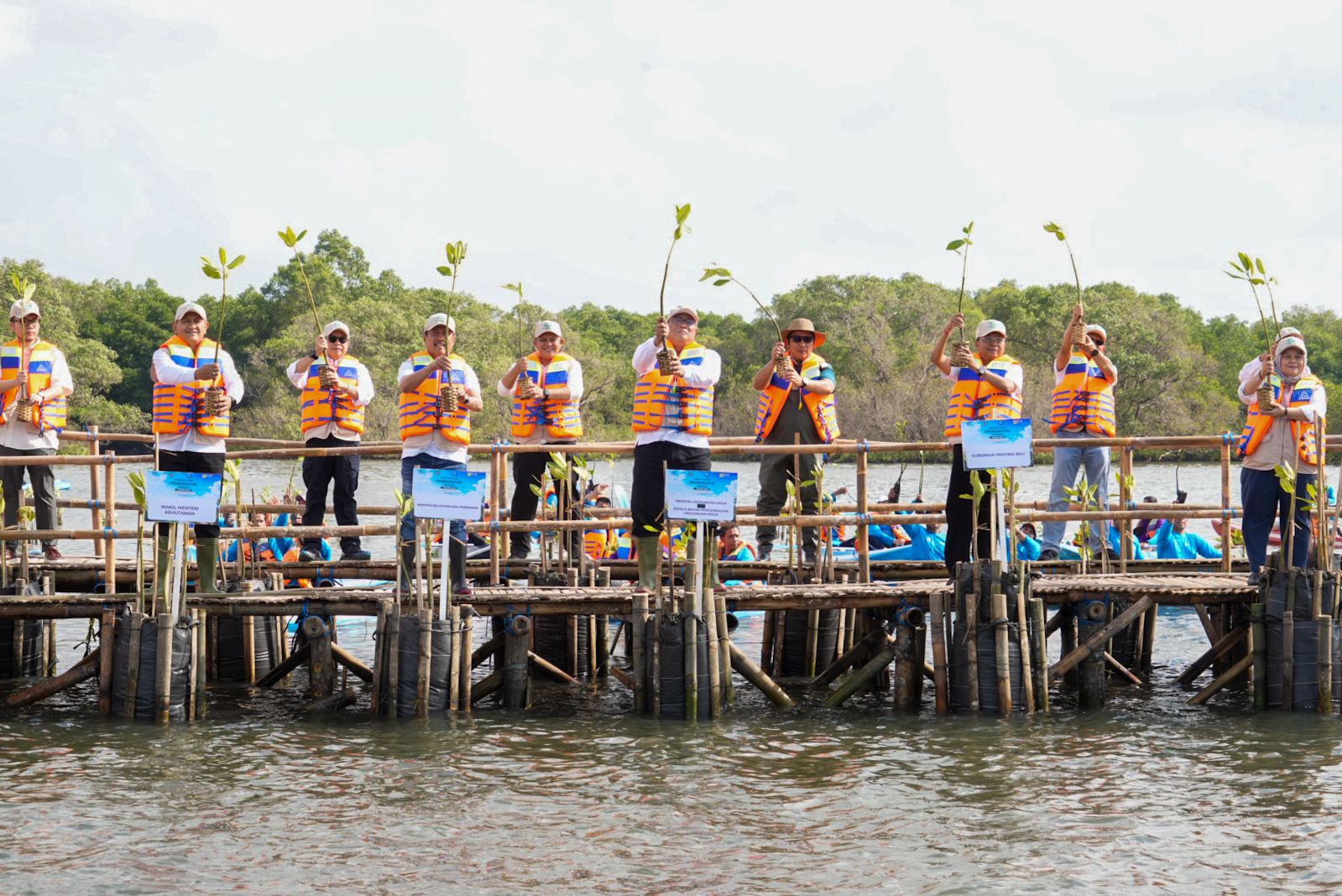
Indonesia’s Deputy Minister of Environment, Mr Diaz Hendropriyono, called on the private sector to participate in tree and mangrove planting programmes, stressing that restoring Indonesia’s shrinking mangrove forests is essential for improving air quality and mitigating the impacts of climate change. He noted that Indonesia’s mangrove area has declined significantly over the years, underscoring the urgency of large-scale rehabilitation, while recurring El Niño conditions could contribute to poorer air quality and higher pollution levels.
Beyond improving environmental resilience, mangrove restoration is also vital to safeguarding Indonesia’s fisheries and long-term food security. Speaking during the World Mangrove Day 2026 commemoration in Bali, Indonesia’s Minister of Marine Affairs and Fisheries, Mr Sakti Wahyu Trenggono, said rehabilitation efforts must restore ecosystem functions rather than focus solely on planting trees. Indonesia is home to around 23 percent of the world’s mangrove ecosystems, yet approximately 40 percent of its mangrove forests have been lost over the past three decades, with nearly one-fifth now classified as being in critical condition.
To address these challenges, the Indonesian government is advancing mangrove restoration as part of its blue economy strategy, targeting the expansion of marine conservation areas to 97.5 million hectares by 2045. It is also revitalising 14,000 hectares of unproductive ponds along Java’s northern coast to integrate ecosystem restoration with sustainable aquaculture, job creation and national food security.
Achieving these ambitions will require sustained collaboration with the private sector and local communities. The Indonesian Forest Concession Holders Association (APHI) has pledged to support long-term mangrove management. APHI Chairman Mr Soewarso said rehabilitation success should be measured not only by the number of trees planted but also by ecosystem recovery, plant survival rates and improved livelihoods for coastal communities.
The Ministry of Forestry has also reported measurable progress under its rehabilitation programme. Indonesia’s Deputy Minister of Forestry, Mr Rohmat Marzuki, said the ministry and its partners rehabilitated 91,678 hectares of mangroves by the end of 2025 and aim to restore more than 17,000 hectares in 2026. With continued collaboration among government agencies, businesses, development partners and coastal communities, Indonesia aims to accelerate mangrove restoration while strengthening climate resilience, protecting biodiversity, supporting sustainable fisheries and improving coastal livelihoods for future generations.
Source: ANTARA News