
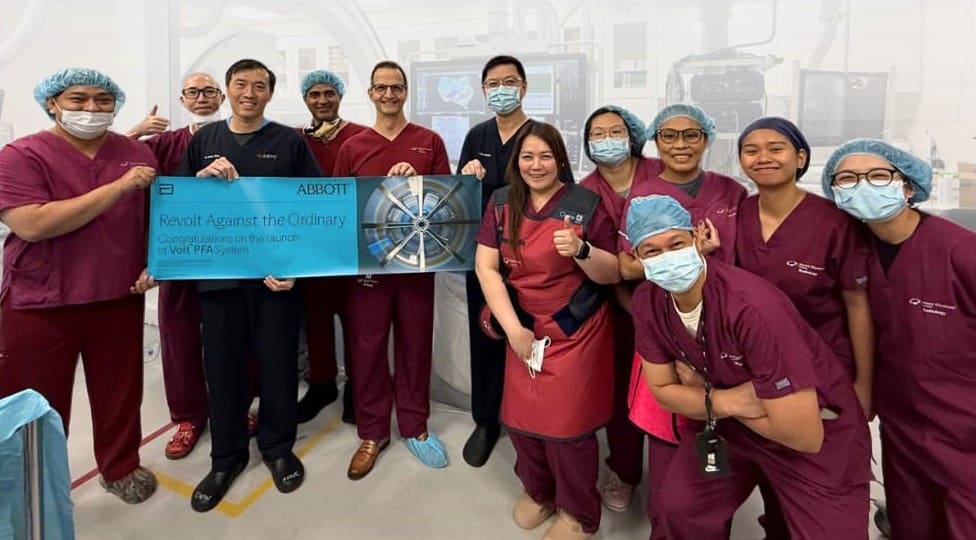
Hospital expands minimally invasive heart care with new technology
Mount Alvernia Hospital in Singapore has completed its first procedure using the Volt™ Pulsed Field Ablation (PFA) System, marking a milestone in its cardiovascular services and expanding treatment options for eligible patients with atrial fibrillation (AF), the most common type of cardiac arrhythmia.
The procedure was performed by cardiologists Dr Jeremy Chow and Dr Pipin Kojodjojo alongside the hospital’s cardiovascular team. According to the hospital, the achievement reflects its continued adoption of advanced medical technologies to strengthen cardiac care and enhance patient outcomes.
The Volt™ Pulsed Field Ablation System is a minimally invasive technology that uses brief, high-energy electrical pulses to selectively target the heart tissue responsible for abnormal heart rhythms while minimising effects on surrounding structures. The system is indicated for eligible patients with paroxysmal and persistent atrial fibrillation, offering an alternative treatment approach within the field of cardiac electrophysiology.
Mount Alvernia also acknowledged healthcare company Abbott for supporting the introduction of the Volt™ PFA System, highlighting the collaboration in bringing the latest electrophysiology technology to the hospital.
“As we continue to adopt innovative medical technologies, Mount Alvernia Hospital remains committed to delivering safe, compassionate and patient-centred care, ensuring our patients have access to advanced treatment options that support desired health outcomes,” the hospital said.
Pulsed field ablation is an emerging technology that uses electrical fields instead of heat or extreme cold to ablate targeted heart tissue. The approach has been evaluated in international clinical studies for the treatment of atrial fibrillation and is gaining adoption as healthcare providers expand minimally invasive treatment options for heart rhythm disorders.
The successful first procedure strengthens Mount Alvernia Hospital’s cardiovascular capabilities and reflects the continued evolution of cardiac electrophysiology, with hospitals increasingly adopting new technologies to broaden treatment options for eligible patients with atrial fibrillation.
Source: Mount Alvernia Hospital