
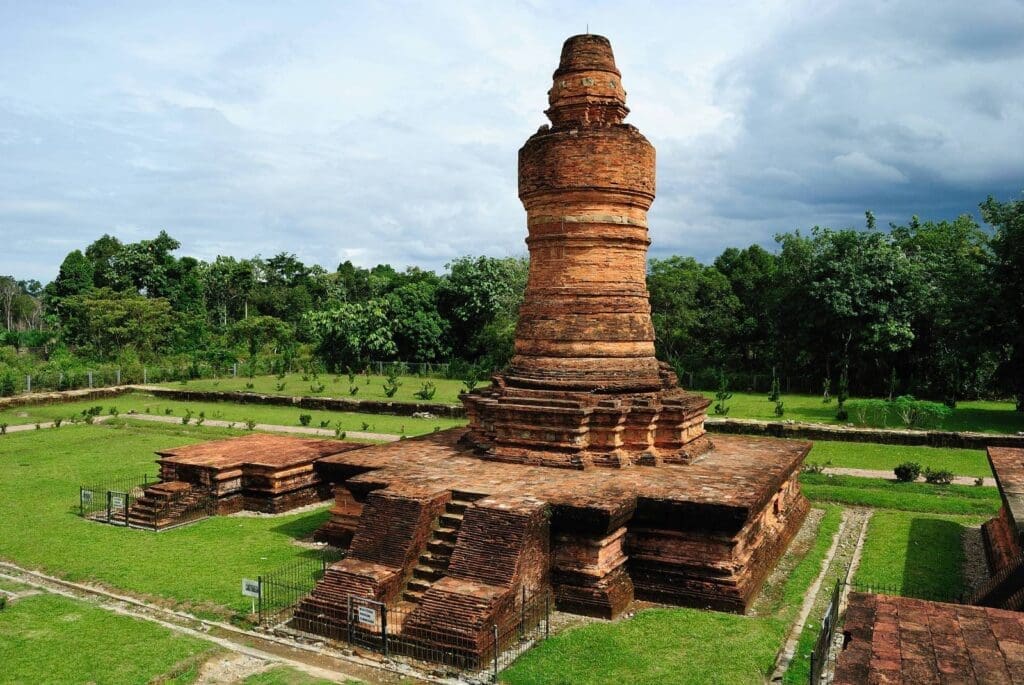
Hidden within the quiet landscape of Kampar, Candi Muara Takus stands as one of Sumatra’s most important historical and spiritual landmarks.
Located in Kampar Regency, around three hours from Pekanbaru, Candi Muara Takus is a rare reminder of the ancient Buddhist influence that once spread across Sumatra. Believed to date back to the era of the Sriwijaya Kingdom, the temple complex is considered one of the oldest historical sites in Riau Province. Surrounded by greenery and open landscapes, the atmosphere feels peaceful and timeless, offering visitors a different side of the region beyond its modern urban development.
Unlike the large stone temples commonly associated with Java, Candi Muara Takus is primarily constructed from red brick and sandstone, giving it a distinctive appearance. The complex includes several structures, such as Candi Tua, Candi Bungsu, and Mahligai Stupa, each reflecting architectural influences tied to Buddhist traditions and regional history. Though modest in scale compared to Indonesia’s more famous temples, its historical significance remains deeply important.
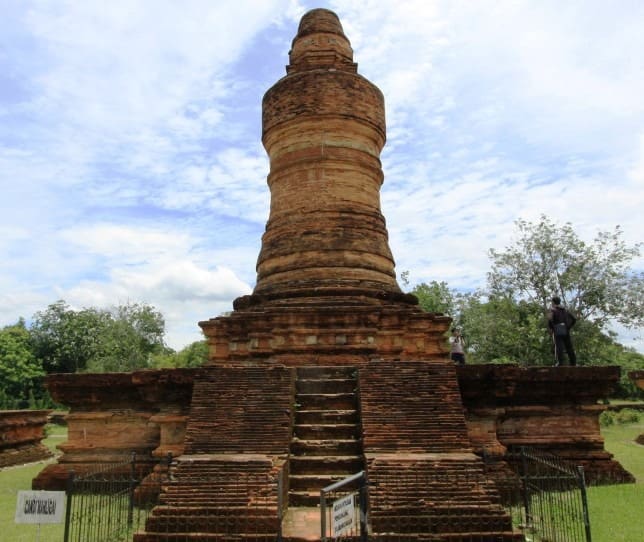
The journey to Muara Takus is part of the experience itself. As visitors leave the city behind, the scenery gradually shifts into quieter roads, rural landscapes, and stretches of green countryside. Upon arrival, the site offers a calm environment ideal for slow exploration, photography, and reflection. The open grounds and minimal commercial activity allow the historical atmosphere to remain largely undisturbed.
Today, Candi Muara Takus continues to attract both tourists and Buddhist pilgrims, particularly during religious celebrations. More than just a heritage site, it represents a connection to the cultural and spiritual history of Sumatra. For travellers exploring beyond Pekanbaru, the temple offers a meaningful journey into Indonesia’s past — one shaped by faith, trade, and centuries of regional influence.
Source: Ines Yolanda