
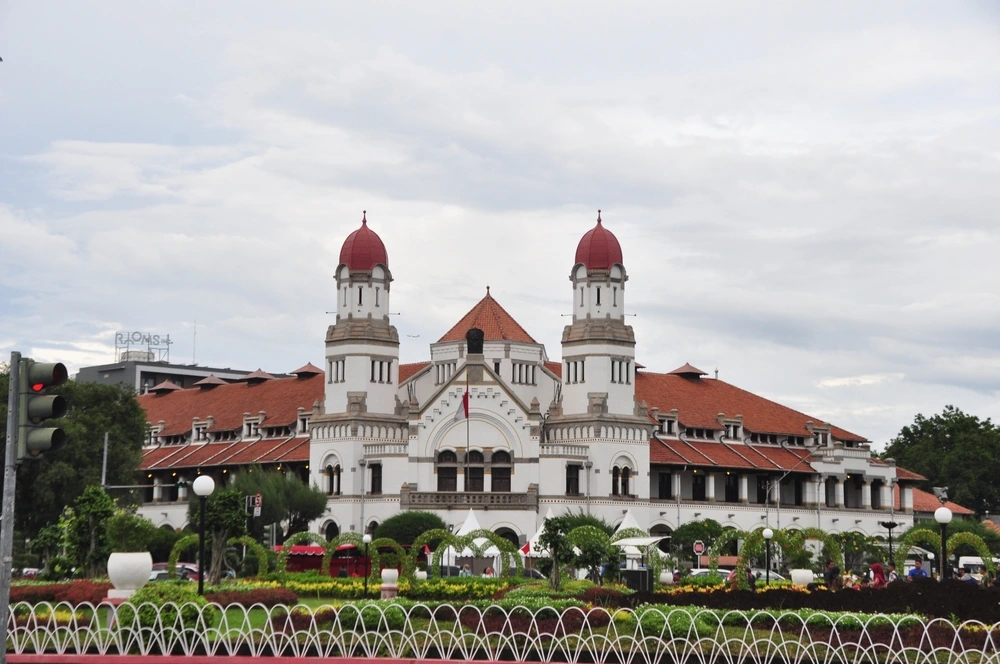
Semarang’s iconic heritage attraction blending history, architecture, and culture.
Lawang Sewu is one of Indonesia’s best-known heritage landmarks, located in Semarang, Central Java. Originally built in the early 20th century as the headquarters of the Nederlandsch-Indische Spoorweg Maatschappij (NIS), the Dutch East Indies Railway Company, the Dutch colonial-era building now serves as a railway museum and heritage gallery. Combining history, architecture, and culture, Lawang Sewu remains one of Semarang’s must-visit attractions.
Although its name translates as “A Thousand Doors,” Lawang Sewu does not literally have a thousand doors. Instead, its numerous doors, tall windows, spacious corridors, and elegant New Indies architectural style create the illusion. Colourful stained-glass windows, a symmetrical layout, and well-preserved interiors make the landmark a favourite among architecture enthusiasts and photographers.
The museum houses historical photographs, railway maps, communication equipment, office furnishings, staff uniforms, and locomotive models that trace the development of Indonesia’s railway network. These collections offer visitors valuable insight into the country’s transportation heritage and the building’s important role in railway administration.
Lawang Sewu is also associated with local folklore and ghost stories that have circulated for decades. While these legends continue to intrigue visitors, careful restoration has transformed the site into a heritage museum focused on history, architecture, and education.
Visitors can join guided tours, admire the building’s architectural details, photograph its grand halls and stained-glass windows, or explore the historic basement corridors and underground drainage system, which later became associated with the building’s wartime history. The landscaped gardens provide a relaxing setting before continuing to nearby attractions, including Tugu Muda, Mandala Bhakti Museum, Sam Poo Kong Temple, Kota Lama (Semarang Old Town), and Blenduk Church. No visit to Semarang is complete without sampling the city’s famous lumpia.
Today, Lawang Sewu stands as a symbol of Indonesia’s commitment to preserving its architectural and cultural heritage, inspiring visitors from around the world to discover the stories that have shaped the nation’s past.
Source: Indonesian Ministry of Tourism